

“With every goodbye, I get a little better at it — feeling grateful for the connection, rather than mourning the end of it.”
Not a lot has happened this week. As predicted in my previous post, I spent every day at warung Bentang, or outside the tattoo studio next to it, and hung out with my friends.
Reportage Ceremony
Sunday is no different from the other days and I go to the tattoo studio around 18:00. When the Gojek turns into the street, we are hindered by a big crowd of people dressed up in beautiful garments. They are surrounding some kind of stage where a group of dancers are performing with big masks on their faces and outfits that look like they weigh more than I can lift in the gym.
My Indonesian friends explain to me that the ceremony they’re performing is called Calon Arang. It is named after a character from a myth dating back to the 12th century.
CALON ARANG MYTH
The myth says that Calon Arang was a widow and a powerful witch who practiced black magic in the village of Girah. The entire village feared her, and because of this, her daughter — though beautiful — was unable to find a husband. This enraged Calon Arang.
As punishment for the village’s rejection of her daughter, she wanted to curse Girah. So she sacrificed a young girl to the goddess Durga, invoking dark powers. The day after, a flood devastated the area, and a plague followed, killing many of the survivors.
At this point in history, Java was not yet called Java but was part of the Kingdom of Kahuripan, ruled by King Airlangga. Hearing of the destruction in Girah, the king sent an army to confront Calon Arang. But the witch was too powerful — she cast a spell that drove the soldiers into a trance, causing them to try to stab themselves with their kris (traditional daggers). Fortunately, the high priest Mpu Bharadah cast protective mantras that prevented the soldiers from dying.
Realizing force would not defeat her, the king asked Mpu Bharadah for help. The high priest then sent his disciple, Mpu Bahula, to marry Calon Arang’s daughter, Ratna Manggali, as a way to infiltrate her household. During his stay, Bahula stole the Lontar, a sacred palm-leaf manuscript containing her powerful black magic spells.
Deprived of her magic, Calon Arang lost her strength. When the king’s army returned to Girah, she was finally defeated — in some versions of the myth, she dies in battle, in others, she runs away.
Luckily I had my camera with me, and though I was hindered by the large crowd, I was still able of capturing some photos.


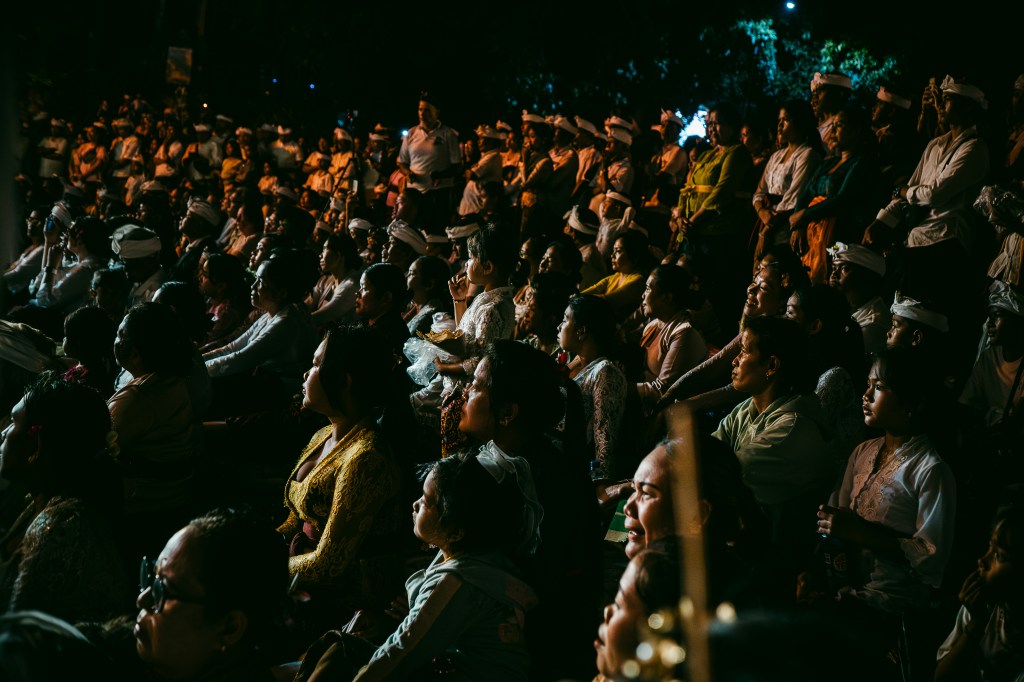


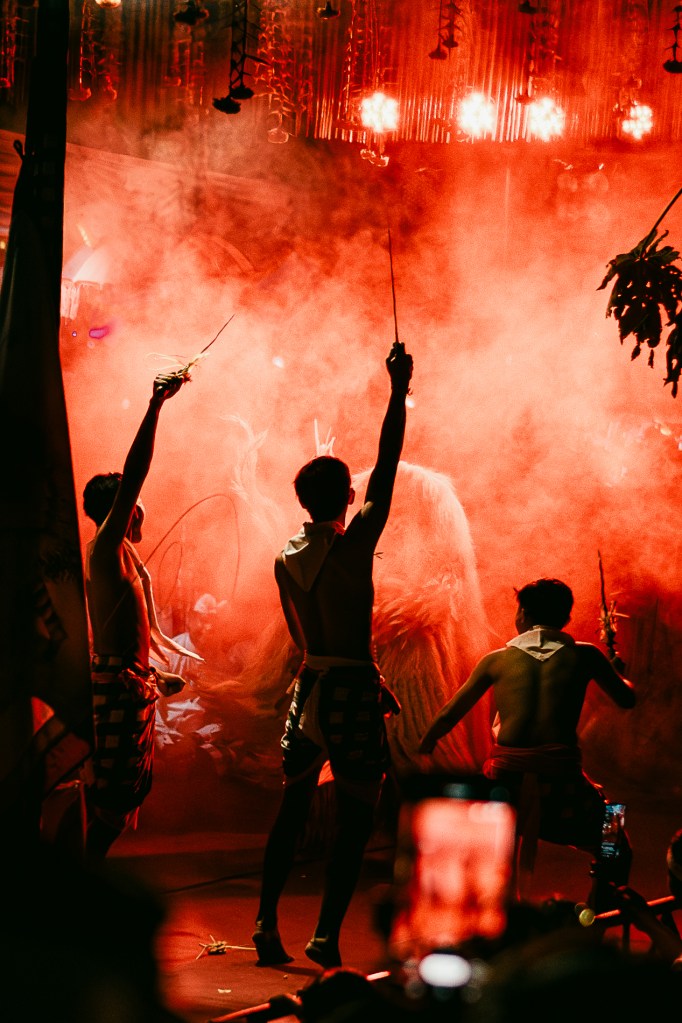
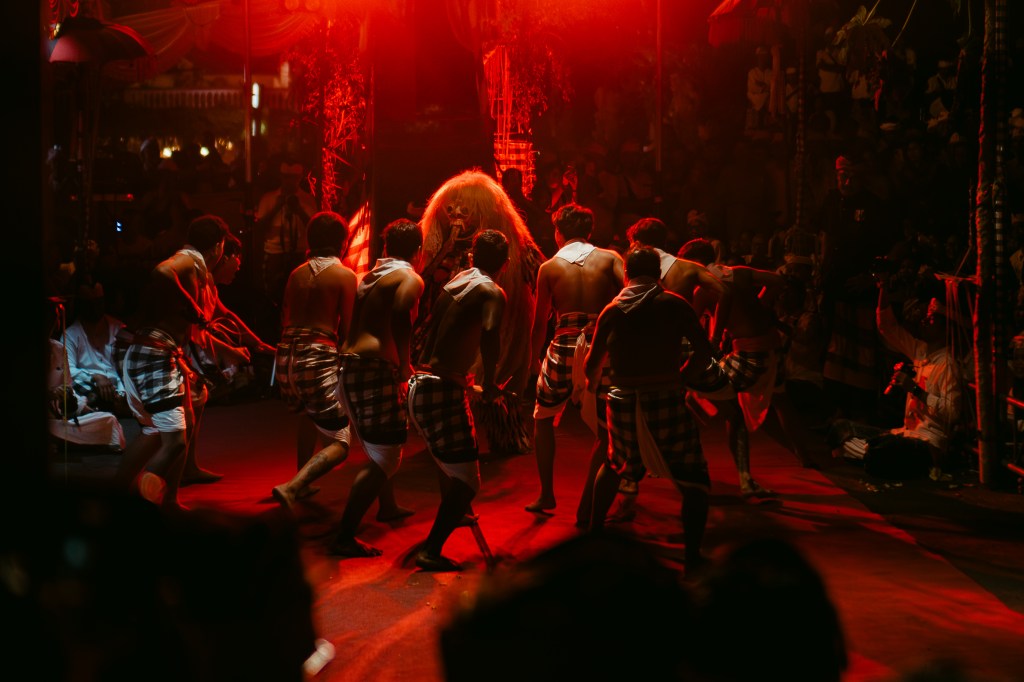
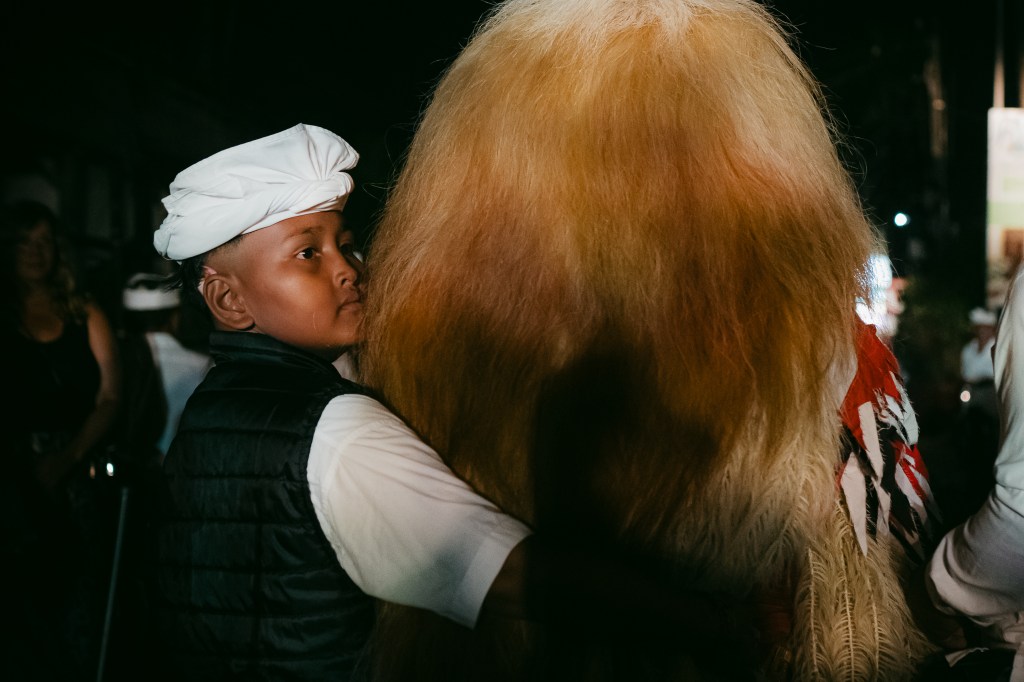
Mia leaves
That same Sunday night is Mia’s last night in Ubud. We spend it like every other one, except we take the party to another bar named Blue Doors after the warung closes.
TThis time is no different from any other, and I feel bittersweet about Mia’s departure. With every goodbye, I get a little better at it – feeling grateful for the connection, rather than mourning the end of it. Despite being an emotional wreck most of the times, I am also very optimistic, and I believe that I will meet all of my friends again someday.
Going on a Side Quest
When I hear that Salma, one of the tattoo artists from the studio, is going away for a couple of days, I dramatically say: “No, don’t leave me too!” To which she answers: “You can come with me.”
I don’t know if this is still surprising or not, but it takes me a good ten seconds to think it over before I decide to go with her. She’s visiting her family in Jogja (or Yogyakarta), which is a city in Java, near Jakarta.
Instead of flying like her, I decide to take a seventeen-hour bus. It is a lot cheaper and with a painkiller or four, I don’t mind sitting on a bus. I can read and write and listen to music – which could keep me occupied for days.
Things I’ve Learned (and Would Recommend):
- Religious ceremonies might block your road, but they’re usually worth the detour.
- If you’re a softie about goodbyes, try looking at them as ‘see-you-laters’.
- When in doubt, pack your camera — the best moments are unplanned.


 CelsAway
Leave a comment